
What can cooperation between civil society and the municipality look like and what opportunities does this bring?
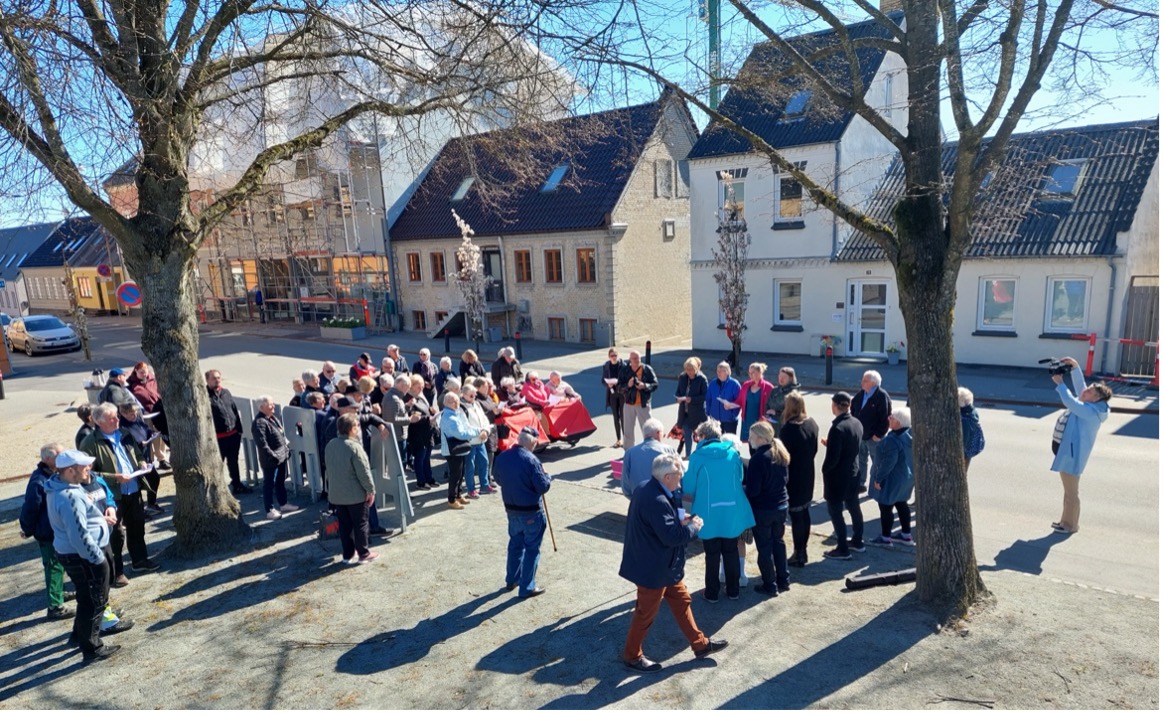
In collaboration with Fremfærd Health and Elderly and Viden på Tværs, Resonans has uncovered 6 cases from the Danish municipalities that show how cooperation between municipalities and civil society in the area of the elderly can look like in practice. The aim is to provide inspiration and concrete measures to organize and develop cooperation in the best possible way. The background is the third core value of the Elderly Act on civil society cooperation and the political visions and principles of volunteerism in each municipality.
The six municipal-cases are:
- Svendborg Municipality: Sport and movement communities and close cooperation with civil society
- Kolding Municipality: Dementia-friendly communities and maturing cooperation with civil society
- Roskilde Municipality: Social referral and bridging towards civil society
- Assens Municipality: Strategic and organisational anchoring of volunteerism
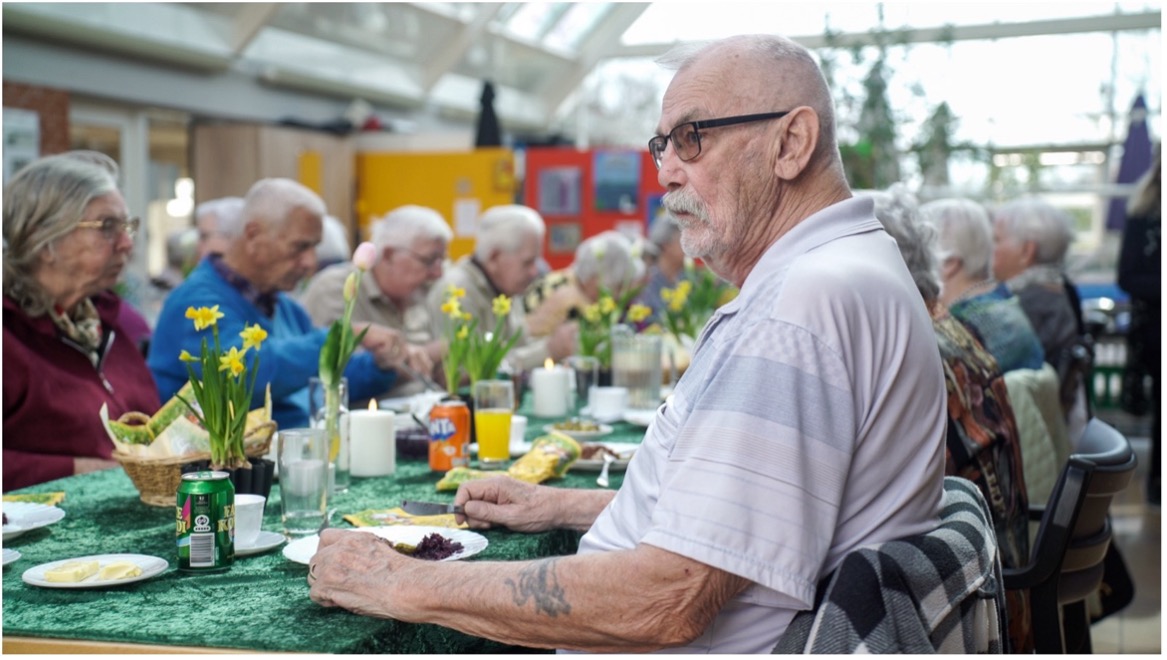
- Guldborgsund Municipality: 16 open meeting places with attractive activities and community
- City of Copenhagen: Relational Guidance - a new way into communities
Svendborg Kommune
Sports and movement communities
Everyone should have the opportunity to participate in communities and be part of the movement.
In Svendborg Municipality, the focus has been placed on the physical well-being of nursing home residents, as many lack movement and exercise in everyday life and employees lack the time and resources to prioritize movement activities.
Therefore, the municipality has partnered with Svendborg Senior Idræt, which with its 1,600 members contributes volunteers to the municipality's 15 care centres. All care centres have been sport certified and both staff and volunteers have received training to best support residents. The goal is for all residents to have the opportunity to be part of communities focused on movement and exercise.
A key part of the effort has been to create common understanding and ownership through education, dialogue and clear division of roles. Designated ropeholders strengthen cooperation between care centres and associations, and experience shows that management support, a clear grounding in the core task and good hosting of volunteers are essential to success.
Kolding Kommune
Dementia-friendly communities
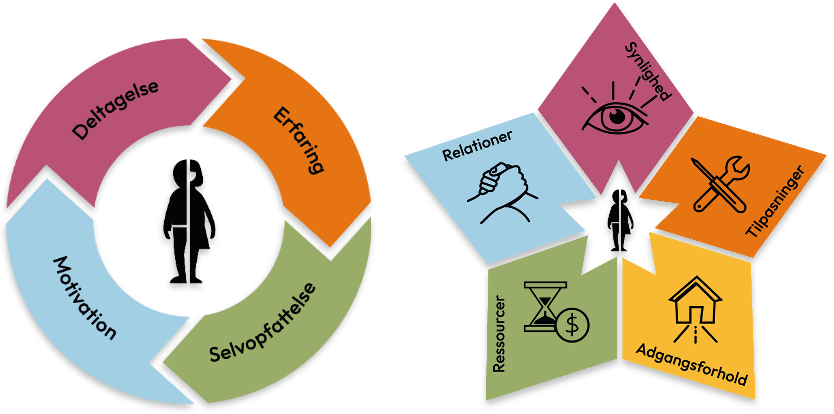
The Kolding Municipality has developed the model Self-Esteem and Coherence, which is based on five living rules that clarify what actions are needed in everyday life to create self-esteem and coherence for citizens. In practice, the model means that care homes not only work with dementia professionals internally, but also reach out to the local area, as many citizens live with dementia in their own homes for several years.
The aim is to strengthen safety and knowledge about dementia in the local environment.
As a concrete test, the municipality has partnered with a local primary school, where pupils participate in the care choice profession “Live with the Old Ones”. Here, dementia consultants contribute knowledge before students meet the nursing home residents. Collaboration creates value for both parents and students.
Experience shows that cooperation works best when it is prioritized strategically, supported by management, as well as when volunteers meet with clear roles, recognition and a clear framework.
Roskilde Kommune
Social referral and bridge-building
Many citizens struggle with social, mental or physical challenges, and the stakes around them are often divided across sectors. Social referral addresses precisely this challenge by guiding citizens on to relevant offerings and communities in the local community. It is a holistic approach in which the needs of the citizen are put at the heart and where welfare professionals are given the opportunity to refer to local activities and forms of support that go beyond traditional efforts.
A key role in the effort is the bridge builderto which the citizen is referred by professional professionals. The bridge builder assists the citizen in drawing up a personal plan and in finding relevant local offerings and communities that the citizen can become a part of.
The conversations with citizens receiving social referral are conducted primarily via general practitioners. The conversation ensures that citizens are supported close to their homes and near the activities they can subsequently proceed with. For the effort, a conversation guide has been developed as well as the sheet “My Conversation”.
The focus is on the citizen's own dreams and desires for the future -- not on leading them to a place that the system judges is best for them.
Assens Kommune
Strategic and organisational anchoring of volunteerism
Assens Kommune works strategically and organizationally to anchor cooperation with civil society in order to strengthen quality of life and reduce loneliness among the elderly.
Effort is politically rooted in vision “We create a good life together.” and has created 4 principles of volunteerism:
1. Civil society isan equal partner in the development of activities in the field of the elderly.
2. It should be easy to engage
3. Volunteering is built on desire and commitment
4. Everyone can contribute something
At the heart of the model is the creation of a cross-cutting unit, including prevention consultants, community coordinators, dementia consultants and bridge builders, tasked with preventing loneliness and strengthening health through activities and communities in close interaction with volunteers and associations.
It is about finding existing communities suitable for the citizen, supporting voluntary initiatives, making it easy to “find the commune”, creating new communities across generations, as well as supporting local activities such as dementia cafes, senior life fairs and volunteer-run activity houses.
The case shows that volunteering is seen as reciprocal and relationship-borne and therefore active work is done with mindset, dialogue, conflict prevention and local anchoring, so that communities become an integral part of the core task in the field of elderly people.
We are nothing without the volunteers—volunteerism must be mutually rewarding for all parties.
Guldborgsund Municipality
16 open meeting places with attractive activities and community
In Guldborgsund Municipality, 16 Open Meeting Places for Seniors have been established in just three years, distributed in the local communities. The initiative stems from an increasing awareness of loneliness and mental distress among older people. The initiative is a political priority and is supported by a collaborative approach, for example, by two volunteer consultants who work closely with citizens, associations and local enthusiasts to develop the activities.
The role of the municipality is first and foremost to create direction, support and facilitate. This means that activities grow based on the resources, ideas and needs that exist locally. Guldborgsund Municipality's concept of Open Meeting Places manages to bring together both socially vulnerable and resourceful elderly people. Participants experience increased well-being and improved self-esteem, and many gain access to new relationships and communities in their immediate area.
It is important to enlarge and amplify existing communities, to invite noticeable experiences together across, and to create new lines of connection and new opportunities locally.
The case illustrates how a municipality, through clear management support, dedicated employee resources and an open, dialogue-based approach, can strengthen local engagement and create sustainable communities with civil society as a driving force.
Copenhagen Municipality
Relational Guidance - a new way into communities
We must have opened our eyes among employees and citizens to what are the communities in the close local area.
For a number of years, the City of Copenhagen has worked systematically to prevent and alleviate loneliness among older people by supporting them in finding their way into civil society communities. With the effort Relational Guidance The ambition is now to strengthen cooperation and coordination with local voluntary actors and make the approach a permanent part of operations.
The effort is based on home care workers motivating and supporting citizens to take small, manageable steps into new communities. Employees are trained as loneliness ambassadors and are trained to handle the difficult conversation, create motivation and work structured with the progression of the citizen.
At the same time, efforts are being made to strengthen relations with civil society through joint forums, seminars and dialogue on concrete civic processes. A key challenge has been to find the right match between citizens and associations and to create mutual understanding of each other's frameworks and working methods.
The article is based on material prepared by Resonance and is also inspired by an article from VPT, which can be read on their website, where there is also further information on each case. Read the article here.
More articles
We write articles that can help top managers, boards, employees, citizens and business actors to succeed better - both together and separately.



Get the latest news on strategy implementation
If you want to keep up with the latest trends and developments in strategy realization, our LinkedIn page is the right place for you.
Visit us on LinkedIn