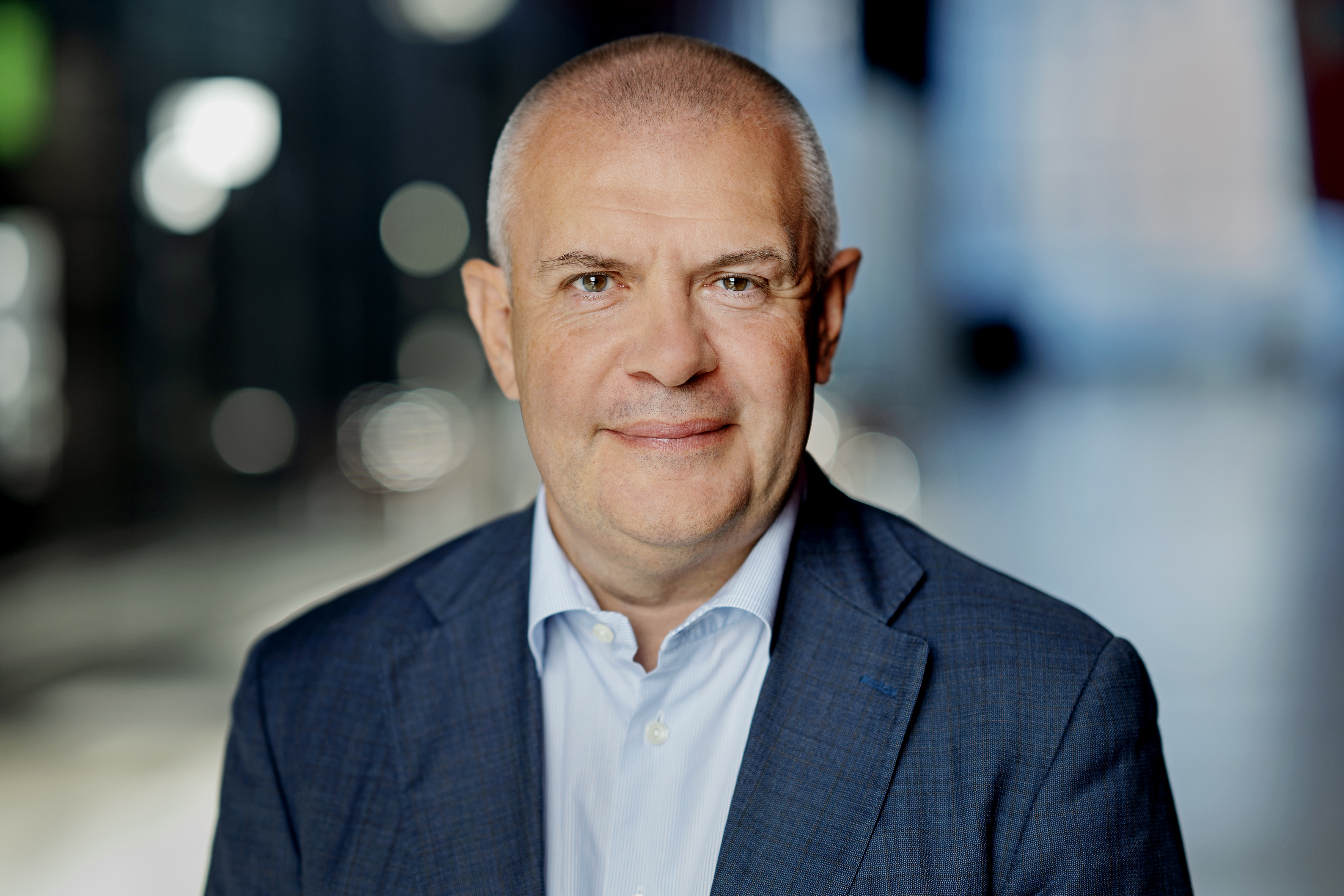
Kim Kehlet Johannsen
Kim is working to transform Velliv's 2028 strategy, which was recently launched at a major kick-off event in Royal Stage for all 750 Velliv employees, into a management tool for daily priorities and decisions.

What do strategy and strategic work mean to you?
”For me, strategy is first and foremost about clarity. We need to be clear about our ambitions, our goals, and what we are working towards, and we need to be clear with both our employees and our customers.”
The previous strategy existed somewhat separately from the organization and consequently faded into the background of daily operations. There was no common ground when disagreements arose – no clear direction, no defined priorities, and no specific goals:
“The strategy wasn't discussed, it wasn't measured in daily operations, and no one took ownership of it.”
The situation thus became straightforward – yet demanding: The strategy needed to clarify Velliv's direction and what would be deliberately excluded. It had to serve as a basis for daily decisions – not merely a narrative, but a framework for priorities.
And most importantly: It had to be owned by those who would implement it.
When have you been bold in your strategic work?
On the surface, clarity might seem trivial. In practice, it's quite the opposite. I believe it's bold of us to be so transparent about our goals – both internally within the organization and externally with customers and partners:
“It's a bit nerve-wracking to stand here and talk about these goals.”
We've chosen goals that everyone can track. This also means that everyone can see whether we succeed or not. In this way, the goals become tangible.
Therefore, it is important for me that we all here at Velliv know what we want and how we intend to get there – it is crucial for our success.
“It's the heart that has the competence to bring the strategy to life.”
Therefore, we invited all 750 employees to Royal Stage to engage in dialogue about the strategy and the 4 strategic moves. The strategic moves are what we call our focus areas within the strategy. Everyone should be able to see themselves in them.
How does your culture support the strategy?
Strategy and culture are inextricably linked. Creating a culture where the strategy lives in our behavior is absolutely crucial in everything we do – from our communication with our customers to our communication with each other.
The worst thing I know is when employees are unsure why they are here and what the purpose is. Therefore, for me, it's about everyone knowing what we are working towards, why they are here, and how they contribute to us achieving our goals.
For the same reason, we don't dictate the details from the top. They are fleshed out within the organization – where knowledge, experience, and commitment reside. If you're in a support function, you are still a vital piece for us to succeed with the strategic focus areas. The goals are fixed, but we will adjust the path to get there. The strategy is put into practice in the individual departments.
“It's a form of modern leadership. We know where we're going – but not how.”
How is the strategy experienced in daily life at Velliv?
We have a strong focus on our core value of integrity, which for me also means openly sharing input and experiences that can strengthen our collaboration. Feedback is not criticism, but a constructive way to show engagement and care for one another. If you don't know what is expected, it's impossible to know when you succeed and when you can improve. Therefore, feedback must be a central element in our culture and communicated openly both internally and externally.
“We evolve with the purpose of creating value for our customers”
The strategy can also be experienced because we have measurable ambitions. “Everyone can see whether we succeed or not.” This creates a completely different level of commitment. Because when goals are clear, it also becomes clearer what needs to be prioritized — and what doesn't.
“If you don't dare to articulate what you want to achieve, it will be difficult to generate enthusiasm.”
How do you lead the strategy work?
It requires repetition and ongoing dialogue – we need to keep explaining why we do what we do. The strategy demands that we work on our internal processes, and that's a big change for many of our employees. Among other things, Operational Excellence is being introduced, where we work more structured with processes, documentation, and cross-functional coherence.
This is a new way of working for many, and it requires adjustment. But it's a crucial part of realizing the strategy in practice. It's a turbulent time at Velliv, and in working with my own leadership team, I strive for us to stand united behind the strategy. So that the organization can feel that we are committed to this, and we are committed to it together – and I believe we have succeeded in that.
Another important element in the strategy process was therefore also to discuss everything Velliv should not be. Should it be a financial supermarket? Should it target all customers? Should it expand more broadly?
“We tried to be very clear about: This is what we want. And therefore, we cannot also do the other things.”
This is crucial in a market where many companies are moving in the same direction and communicating the same values.
For me, strategy shouldn't just be something you understand and do once. It's something you stick with. Otherwise, it doesn't provide value.
See more top executive interviews